
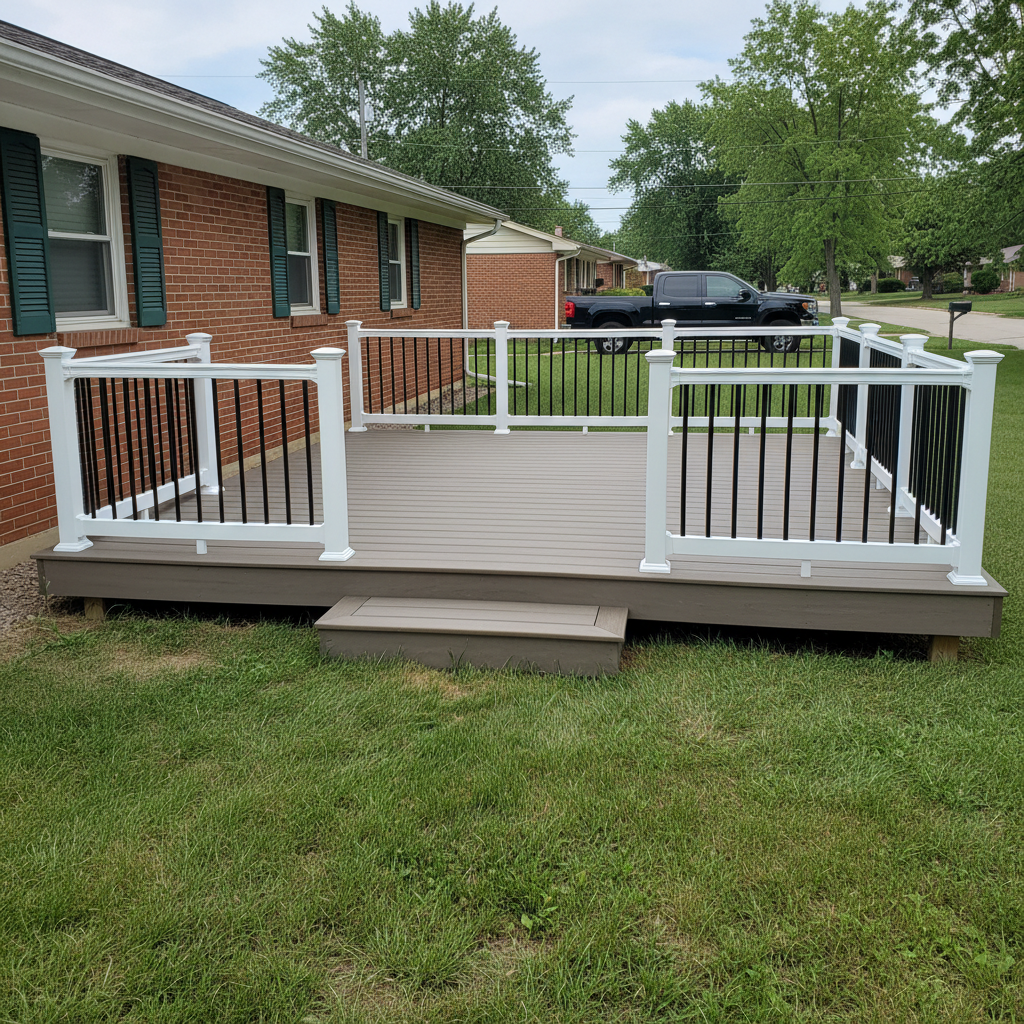
A deck is one of the few home projects where the mistakes don't show up for a year or two, and by then the person who made them is hard to track down. The ledger bolts that weren't lagged into the rim joist, the post footing poured 18 inches down instead of the 42 inches frost depth requires in this part of Illinois, the joist hangers that were nailed with roofing nails because the right fasteners weren't on the truck that day. None of that is visible once the boards go on. So picking a builder here isn't really about who has the nicest website. It's about who does the parts you can't see correctly.
Permits aren't optional, and they shouldn't want to skip them
Any deck attached to the house, and most freestanding ones over a certain height, need a permit through the local building department. If a contractor tells you it's faster to just skip that step, that's a reason to stop talking to them. The inspection that matters most is the footing inspection, done before concrete gets poured, because that's the one chance anyone has to check that the hole is actually deep enough and sitting on undisturbed soil rather than loose backfill. Kendall County winters put frost 42 inches down in a normal year, sometimes a little less, sometimes more if there's no snow cover insulating the ground. A footing that stops short of that will heave over a few freeze-thaw cycles, and you'll feel it as a post that's slowly gone out of level, usually noticed because a door or gate on the deck stops closing right. A second inspection usually happens at final, checking railing height, baluster spacing (4 inches max between them is the standard most jurisdictions use), and stair rise and run. If you're in a subdivision like Grande Reserve or Bristol Bay, add the HOA review on top of the village permit, since most of the newer associations around Yorkville have their own rules on setback from the property line and sometimes on decking material and color.
What the soil here actually does
Kendall County sits on glacial till, which in plain terms means heavy clay under most yards, sometimes with a layer of topsoil fill from when the subdivision was graded. Clay holds water. It swells when wet and shrinks when dry, and that movement is exactly what pushes shallow footings out of level over time. It's also why post holes here can look dry and firm on a June afternoon and turn into a mess of standing water after a wet April. A builder who's used to this soil pours footings with a bell shape at the bottom for extra bearing and backfills with gravel, not just the clay that came out of the hole, so water has somewhere to go instead of sitting against the concrete. On older lots near the river, in the established parts of town closer to downtown Yorkville, you'll sometimes hit old fill, broken clay tile drainage lines, or construction debris from decades back. That's a reasonable thing to ask about before digging starts, not something to find out mid-project.
Materials, and what actually changes the price
Pressure-treated pine is still the standard framing material, and it should be rated for ground contact at any post or beam that touches a footing or sits close to grade. For the decking surface itself, you're choosing between treated wood, which needs re-staining every 2 to 3 years in this climate because summer UV and winter moisture both work against the finish, and composite, which costs more upfront but doesn't need that maintenance cycle. A good builder will tell you honestly that composite still expands and contracts with temperature, just less than wood, and that the fastening system needs to account for it with proper gapping, usually around 1/8 to 3/16 inch between boards depending on the brand. Fasteners matter more than people think. Anything near a ledger board or a joist hanger should be hot-dip galvanized or stainless, not the cheap coated screws that corrode when they sit against treated lumber's chemical treatment. The ledger itself needs flashing above it so water running off the house sheds away from the band joist instead of sitting behind the decking and rotting the house framing from outside in. That's a $40 detail that prevents a $4,000 repair five years out.
Reading a bid, and what to walk away from
A real quote should break out labor, lumber or composite material, footings, railing, and any demo separately, so you can see where the money's going. If two bids are far apart, ask why, because the gap is usually in the parts you can't see: footing depth, joist spacing (16 inches on center is standard, some builders stretch it to 24 to save lumber, which leads to a bouncy deck), or whether the ledger is actually bolted through with lag screws versus just nailed. Walk away from anyone who won't put a start and finish date in writing, who wants the whole amount up front, or who waves off the permit question. Also walk away from a bid that seems unusually low on composite decking, since material cost for composite boards runs a known range and a number well under that usually means a lower grade board or hollow-core decking being substituted without telling you. Ask to see a past project in person if you can, not just photos, so you can check the railing for wobble and look at how the stair stringers were cut.
Timeline, weather, and what's reasonable to expect
A standard deck in this area, footings to final boards, usually runs one to two weeks once permits are approved, weather allowing. Concrete footings need a few days of cure before they're loaded with post weight, longer if a cold snap hits, since concrete cures slower below about 50 degrees. Spring and fall are the busiest build seasons locally because summer heat can make staining and sealing tricky (the finish can dry too fast on a 90-degree day and lap-mark), and winter work is mostly limited to framing, since stain and sealant need the surface above freezing to cure properly. If a builder promises a full deck installed in two days regardless of the weather, ask how.
None of this is complicated once you know what to ask. A deck builder who answers footing depth, fastener type, and permit process without hesitating has probably done the work enough times to get it right. We've built and repaired decks around Yorkville long enough to know where the clay gives trouble and where the frost line actually bites, and you can see more about how we approach that work at Oakmont Deck & Patio.